If your doctor has ordered a CT scan, you may be told that the exam will be performed either with contrast or without contrast. Both types of CT scans are common diagnostic imaging tests, but they are used for different purposes and can provide different levels of detail.
A CT scan with contrast uses a special substance to make certain organs, blood vessels, tissues, and abnormalities easier to see. A CT scan without contrast does not use this material and may be preferred when contrast is not necessary or appropriate.
Understanding the difference between a CT scan with contrast vs. without contrast can help you know what to expect before your appointment and why your healthcare provider may recommend one type over the other.
What Is a CT Scan?
CT stands for computed tomography. A CT scan uses X-rays and computer processing to create detailed cross-sectional images of the body.
Unlike a standard X-ray, which produces a two-dimensional image, a CT scan captures multiple images from different angles. These images can then be combined to provide a more detailed view of internal structures.
CT scans are commonly used to evaluate:
- Internal organs
- Bones
- Blood vessels
- The lungs
- The abdomen and pelvis
- The brain
- Injuries
- Kidney stones
- Tumors
- Internal bleeding
Depending on the reason for your exam, your doctor may order a CT scan with or without contrast.
What Is a CT Scan With Contrast?
A CT scan with contrast uses a contrast material that helps certain areas of the body appear more clearly on the images.
Contrast can help radiologists distinguish between blood vessels, organs, tissues, and abnormalities that may otherwise look similar.
CT contrast may be given in several ways, including:
- Through an IV
- By mouth
- In some cases, through another route depending on the exam
The type of contrast used depends on the area being studied and the information your doctor needs.
What Is a CT Scan Without Contrast?
A CT scan without contrast is performed without the use of contrast material.
This type of scan can still provide highly detailed images and may be appropriate for many conditions.
A non-contrast CT scan may be used when doctors need to evaluate:
- Certain kidney stones
- Bone injuries
- Some types of bleeding
- Lung conditions
- Certain head injuries
- Calcifications
- Specific emergency conditions
Whether contrast is needed depends on the reason for the scan.
CT Scan With Contrast vs. Without Contrast: Main Difference
The primary difference is that a contrast CT scan uses a substance designed to improve visibility of certain structures, while a non-contrast CT scan does not.
Contrast can help highlight areas such as:
- Blood vessels
- Organs
- Tumors
- Areas of inflammation
- Certain infections
- Abnormal tissue
Without contrast, CT imaging may be better suited for identifying certain types of stones, fractures, bleeding, or other conditions where contrast is not necessary.
Your doctor chooses the appropriate exam based on your symptoms and medical history.
Why Is Contrast Used in a CT Scan?
Contrast is used to improve image clarity.
Some tissues can look very similar on a CT scan. Contrast changes how certain structures appear, making it easier for the radiologist to identify differences.
A CT scan with contrast may help doctors evaluate:
- Blood flow
- Blood vessels
- Internal organs
- Masses or tumors
- Inflammation
- Infections
- Abdominal conditions
- Certain vascular problems
It can also help determine the size, location, or characteristics of an abnormality.
When Is a CT Scan Without Contrast Used?
A CT scan without contrast may be preferred when contrast would not add useful information.
Common reasons for a non-contrast CT scan may include evaluating:
- Kidney stones
- Certain types of head trauma
- Some cases of internal bleeding
- Bone fractures
- Lung abnormalities
- Sinus conditions
In some situations, doctors may begin with a non-contrast CT scan and then determine whether additional imaging is necessary.
CT Scan With Contrast for the Abdomen and Pelvis
CT scans of the abdomen and pelvis are frequently performed with contrast because it can help visualize internal organs and blood vessels.
A contrast CT may be used to evaluate the:
- Liver
- Kidneys
- Pancreas
- Spleen
- Intestines
- Bladder
- Blood vessels
Doctors may order this type of scan for symptoms such as abdominal pain, unexplained swelling, or suspected internal abnormalities.
CT Scan Without Contrast for Kidney Stones
A CT scan without contrast is commonly used when kidney stones are suspected.
Kidney stones can often be seen clearly without contrast, making a non-contrast CT an effective option for identifying their size and location.
Your healthcare provider will determine whether additional imaging is needed based on your symptoms and test results.
CT Scan With Contrast for Blood Vessels
Contrast can be especially useful when examining blood vessels.
A CT angiography study uses IV contrast to help visualize arteries and veins.
This type of CT imaging may be used to evaluate certain vascular conditions, blockages, aneurysms, or other abnormalities involving blood vessels.
Does a CT Scan With Contrast Take Longer?
A CT scan with contrast may take slightly longer than a non-contrast CT scan because additional preparation is required.
The actual image capture is usually quick, but your appointment may include time for:
- Medical screening
- IV placement
- Contrast administration
- Waiting for the contrast to circulate
- Additional image sequences
A CT scan without contrast generally requires less preparation.
What Does CT Contrast Feel Like?
When IV contrast is administered, some patients experience temporary sensations.
You may notice:
- A warm feeling throughout the body
- A metallic taste in the mouth
- A brief sensation similar to needing to urinate
These sensations are usually short-lived.
If you feel uncomfortable or experience unexpected symptoms, tell the technologist immediately.
Is CT Contrast Safe?
CT contrast is widely used in diagnostic imaging, but it is not appropriate for every patient.
Before receiving contrast, the imaging team may ask about your medical history, allergies, kidney function, and previous reactions to contrast material.
It is important to tell the radiology team if you have:
- Kidney disease
- A history of contrast reactions
- Certain allergies
- Diabetes
- Other serious medical conditions
Your healthcare provider will determine whether contrast is appropriate for your individual situation.
Can You Have a CT Scan With Contrast If You Have Kidney Problems?
Kidney function is an important consideration when IV contrast is used.
Some patients with kidney disease may need additional evaluation before receiving contrast.
Your healthcare provider may review recent kidney function test results or request blood work before the scan.
Do not assume that having kidney disease automatically means you cannot receive contrast. The decision depends on your overall health and the type of examination being performed.
Can You Eat Before a CT Scan With Contrast?
Some CT scans with contrast require patients to avoid food for several hours before the exam.
Other CT scans may not require fasting.
Preparation depends on the area being scanned and the type of contrast being used.
Always follow the instructions provided by your CT imaging center.
If you are unsure whether you can eat before your CT scan, contact the facility before your appointment.
Can You Drink Water Before a CT Scan With Contrast?
In many cases, drinking water before a CT scan is allowed and may even be encouraged.
However, preparation instructions can vary.
Some abdominal or pelvic CT scans may require oral contrast or specific fluid intake before imaging.
Follow the preparation instructions you receive from your healthcare provider or radiology center.
How Is IV Contrast Given?
If your CT scan requires IV contrast, a healthcare professional will place a small IV catheter into a vein, usually in your arm or hand.
The contrast material is injected during the scan at a specific time so images can be captured as the contrast moves through the body.
The IV is usually removed after the examination is completed.
Oral Contrast vs. IV Contrast
Not all CT contrast is administered the same way.
IV contrast is commonly used to highlight blood vessels and internal organs.
Oral contrast may be used for certain abdominal or pelvic CT scans to help visualize the digestive tract.
In some cases, both types of contrast may be used during the same examination.
Your imaging center will tell you what type of contrast is required and how to prepare.
How Long Does a CT Scan Take?
The scanning portion of a CT exam is usually relatively fast.
Many CT scans can be completed in just a few minutes, although the total appointment may take longer because of registration, preparation, or contrast administration.
A CT scan with contrast may require additional time compared with a non-contrast exam.
What Happens During a CT Scan?
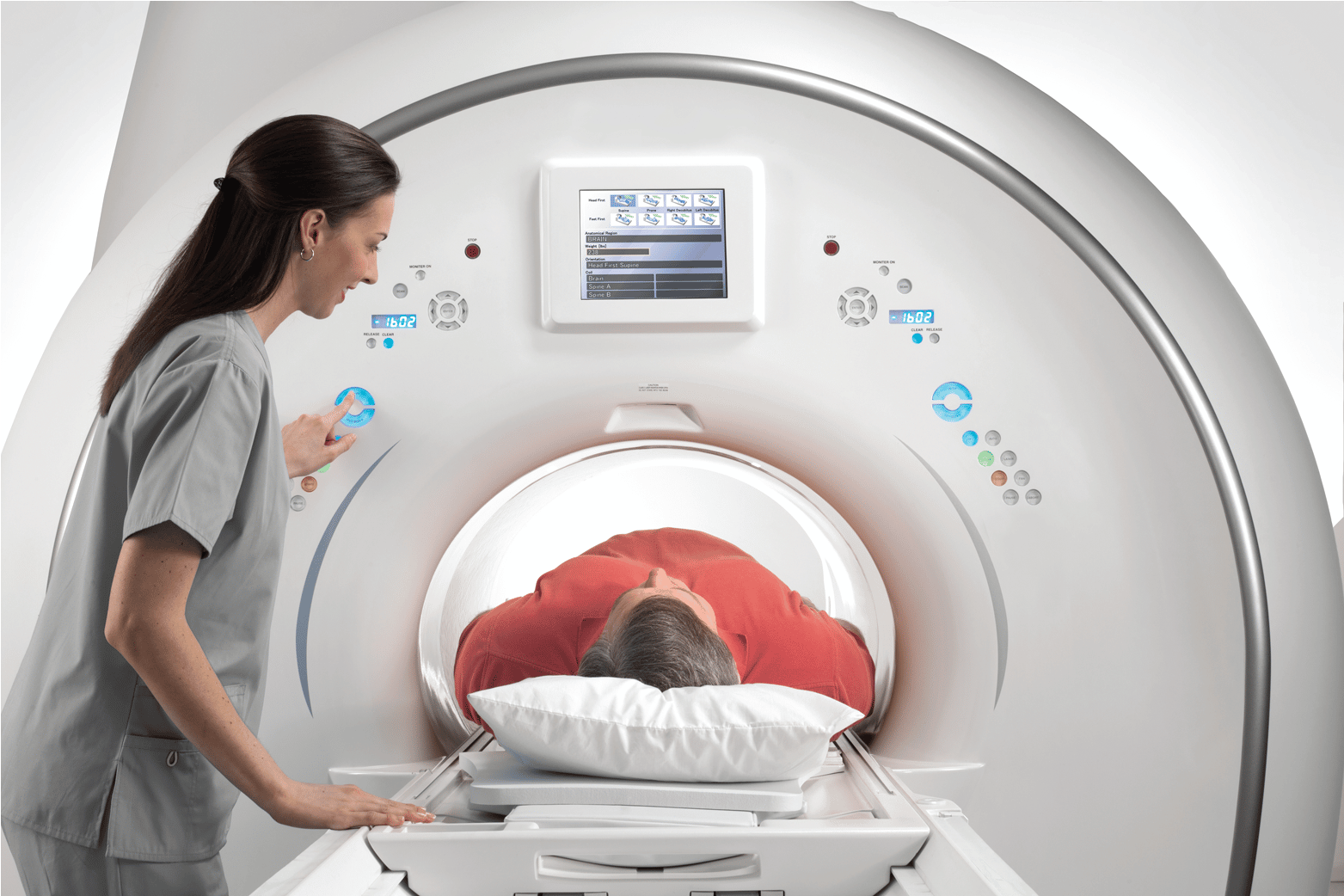
During a CT scan, you will lie on a table that moves through a large ring-shaped scanner.
The technologist will position you based on the area being examined.
You may be asked to:
- Remain still
- Hold your breath briefly
- Adjust your position
- Follow instructions through an intercom
The scan itself is painless.
The technologist can see and communicate with you throughout the examination.
CT Scan With Contrast vs. Without Contrast for the Brain
Both contrast and non-contrast CT scans can be used for brain imaging.
A non-contrast CT may be used in certain emergency situations or when doctors need to evaluate possible bleeding or trauma.
A CT scan with contrast may be ordered when additional detail is needed to evaluate certain masses, infections, blood vessels, or abnormalities.
Your healthcare provider will choose the most appropriate imaging protocol.
CT Scan With Contrast vs. Without Contrast for the Lungs
CT scans of the chest can be performed either with or without contrast depending on the clinical question.
Non-contrast CT imaging may be used for certain lung conditions.
Contrast may be added when doctors need to evaluate blood vessels, certain masses, or other structures in the chest.
The correct exam depends on what your doctor is trying to diagnose.
Can a CT Scan Be Done Both With and Without Contrast?
Yes. Some CT studies include images taken before contrast and additional images after contrast is administered.
This allows the radiologist to compare how certain structures look before and after contrast.
These studies may provide additional information about specific organs, tissues, or abnormalities.
Which Is Better: CT Scan With Contrast or Without Contrast?
Neither option is automatically better.
A CT scan with contrast is better for certain conditions, while a CT scan without contrast is more appropriate for others.
The best choice depends on:
- The area being examined
- Your symptoms
- Your medical history
- The suspected condition
- Whether blood vessels need to be evaluated
- Whether contrast would improve diagnostic accuracy
Your healthcare provider and radiology team determine which type of CT scan is appropriate.
Frequently Asked Questions About CT Scans With and Without Contrast
Why would a doctor order a CT scan with contrast?
Contrast may be used to help doctors see blood vessels, internal organs, tumors, inflammation, infections, and other abnormalities more clearly.
Why would a doctor order a CT scan without contrast?
Non-contrast CT scans may be preferred when evaluating certain kidney stones, fractures, bleeding, lung conditions, or other problems that can be identified without contrast.
Does a CT scan without contrast still show tumors?
Some tumors can be visible without contrast, but contrast may improve visibility and help doctors evaluate certain abnormalities in more detail.
Is CT contrast painful?
The injection itself may feel similar to having an IV placed. Some patients experience a temporary warm sensation or metallic taste when contrast is administered.
Is a CT scan with contrast more accurate?
Contrast can provide additional detail for certain conditions, but it is not necessary for every CT scan. Accuracy depends on using the appropriate imaging protocol for the condition being evaluated.
CT Scan Services in El Paso, TX
Whether you need a CT scan with contrast or without contrast depends on the medical information your healthcare provider is trying to obtain.
Both types of CT imaging can provide valuable diagnostic information, and your doctor will select the appropriate option based on your symptoms, health history, and the area being examined.
Professional Radiology provides CT scan services in El Paso, TX, along with additional diagnostic imaging options for patients and referring healthcare providers.
If your doctor has ordered a CT scan in El Paso, contact Professional Radiology to learn more about scheduling your exam, preparation instructions, and what to expect during your appointment.