If your doctor has ordered an MRI, one of the first questions you may have is how long the scan will take and what the experience will be like. MRI scans are common diagnostic imaging tests, but the length of the appointment can vary depending on the body part being examined, whether contrast is needed, and the number of images required.
In many cases, an MRI takes about 20 to 60 minutes. Some exams may be shorter, while more detailed studies can take longer.
Knowing what to expect during an MRI can help you feel more prepared and make the appointment go more smoothly.
What Is an MRI?
MRI stands for magnetic resonance imaging. It is a diagnostic imaging test that uses a strong magnetic field and radio waves to create detailed images of structures inside the body.
MRI is commonly used to evaluate:
- The brain
- Spine
- Joints
- Muscles
- Ligaments
- Tendons
- Internal organs
- Blood vessels
- Soft tissue injuries
- Certain tumors or abnormalities
Unlike X-rays and CT scans, MRI does not use ionizing radiation.
How Long Does an MRI Take?
Most MRI scans take approximately 20 to 60 minutes.
However, the exact MRI scan time can vary based on several factors, including:
- The area of the body being scanned
- Whether one or multiple body parts are being examined
- Whether MRI contrast is required
- The number of images needed
- The complexity of the examination
- How well the patient can remain still
Your radiology center can give you a more specific estimate based on the MRI ordered by your doctor.
How Long Does a Brain MRI Take?
A brain MRI often takes approximately 30 to 60 minutes.
The exam may take longer if contrast is required or if the radiologist needs additional images.
Brain MRI scans may be used to evaluate symptoms such as headaches, dizziness, neurological changes, or other concerns identified by a healthcare provider.
How Long Does a Spine MRI Take?
An MRI of the spine generally takes about 30 to 60 minutes, depending on the area being examined.
For example, your doctor may order imaging of the:
- Cervical spine
- Thoracic spine
- Lumbar spine
If more than one section of the spine needs to be scanned, the appointment may take longer.
Spine MRI is often used to evaluate discs, nerves, the spinal cord, and surrounding soft tissues.
How Long Does a Knee MRI Take?
A knee MRI often takes approximately 20 to 45 minutes.
MRI is frequently used to evaluate knee injuries because it can provide detailed images of ligaments, cartilage, tendons, muscles, and other structures inside the joint.
The exam may take longer if additional imaging sequences are needed.
How Long Does a Shoulder MRI Take?
A shoulder MRI typically takes about 20 to 45 minutes.
Doctors may order this type of MRI to evaluate rotator cuff injuries, tendons, cartilage, ligaments, joint problems, or persistent shoulder pain.
Some shoulder MRI examinations may involve contrast, which can increase the total appointment time.
How Long Does an MRI With Contrast Take?
An MRI with contrast may take longer than a standard MRI because additional preparation and imaging are required.
Contrast material is usually administered through an IV and helps certain tissues, blood vessels, or abnormalities appear more clearly.
The imaging portion may still take approximately 30 to 60 minutes, but your overall appointment may be longer because of IV placement, screening, and additional image sequences.
How Early Should You Arrive for an MRI?
Many imaging centers recommend arriving about 15 to 30 minutes before your scheduled MRI appointment.
This allows time for:
- Registration
- Paperwork
- Insurance information
- MRI safety screening
- Changing into a medical gown
- Reviewing medical history
- Preparing for contrast, if needed
Arriving early can help prevent delays and give you time to ask questions before the scan begins.
What Happens Before an MRI?
Before entering the MRI room, you will usually complete a safety screening.
Because MRI machines use a powerful magnetic field, the technologist needs to know whether you have metal or implanted medical devices in your body.
You may be asked about:
- Pacemakers
- Cochlear implants
- Joint replacements
- Metal plates or screws
- Aneurysm clips
- Neurostimulators
- Insulin pumps
- Previous surgeries
- Metal fragments
- Pregnancy
- Kidney conditions
You will also need to remove certain metal objects before the exam.
What Should You Remove Before an MRI?
Before entering the MRI room, you may need to remove:
- Jewelry
- Watches
- Earrings
- Necklaces
- Rings
- Hairpins
- Hearing aids
- Eyeglasses
- Keys
- Coins
- Cell phones
- Wallets
- Removable dental appliances
You may also need to change into a gown if your clothing contains metal zippers, snaps, buttons, or other metallic components.
What Happens During an MRI?
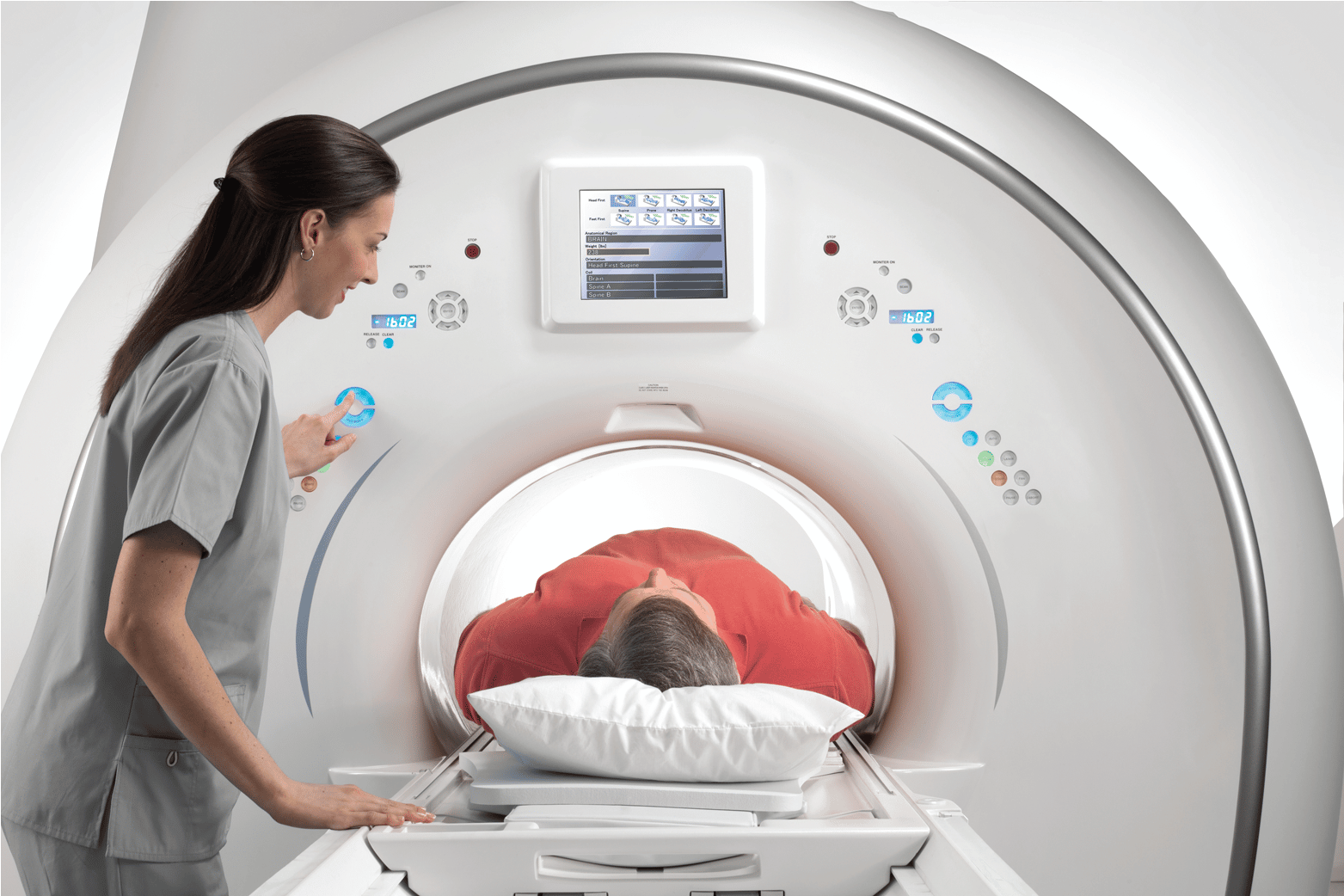
During the MRI, you will lie on a padded table that moves into the MRI scanner.
The technologist will position the body part being examined and may use cushions or supports to help you stay comfortable.
Once the scan begins, the machine will create a series of images.
You will usually hear loud sounds such as:
- Knocking
- Tapping
- Buzzing
- Thumping
These noises are normal.
You may be given earplugs or headphones to help reduce the sound.
Do You Have to Stay Still During an MRI?
Yes. Remaining still is one of the most important parts of an MRI scan.
Movement can blur the images and may require certain parts of the exam to be repeated.
The technologist may ask you to remain completely still for several minutes at a time.
For some exams, you may also be asked to briefly hold your breath while certain images are captured.
Can You Talk to the MRI Technologist?
Yes. Even though the technologist is usually in another room during the scan, you can normally communicate through an intercom.
The technologist monitors you throughout the MRI and can provide instructions during the exam.
Patients are also typically given a way to alert the technologist if they become uncomfortable or need assistance.
What Does an MRI Feel Like?
MRI scans are generally painless.
You should not feel the magnetic field or radio waves being used to create the images.
The main challenges for some patients include:
- Remaining still
- Hearing loud scanner noises
- Lying in one position
- Feeling enclosed inside the MRI machine
- Anxiety or claustrophobia
If you are worried about claustrophobia, tell the imaging center before your appointment.
What If You Are Claustrophobic?
Claustrophobia is a common concern for patients undergoing an MRI.
If you know that enclosed spaces make you anxious, contact the radiology center before your appointment.
Your healthcare provider or imaging team may be able to discuss options that can help make the experience more comfortable.
Understanding that you can communicate with the technologist throughout the procedure may also help reduce anxiety.
Can You Eat Before an MRI?
For many MRI exams, patients can eat and drink normally before the appointment.
However, some types of MRI may require fasting, especially when contrast, sedation, or certain abdominal imaging procedures are involved.
Always follow the instructions provided by your imaging center.
If you are unsure whether you can eat before your MRI, contact the facility before your appointment.
Can You Take Medication Before an MRI?
Most patients can continue taking their normal medications before an MRI.
However, you should follow any specific instructions provided by your doctor or radiology center.
Do not stop taking prescription medication unless your healthcare provider tells you to do so.
What Happens If You Move During an MRI?
If you move while an image is being captured, the image may become blurry.
The technologist may need to repeat part of the scan, which can increase the total MRI time.
This is why remaining still helps make the exam faster and improves image quality.
If you are uncomfortable, tell the technologist rather than moving suddenly.
Why Do MRI Scans Take Longer Than CT Scans?
MRI scans generally take longer than CT scans because MRI captures multiple detailed image sequences using different settings.
A CT scan can often be completed in a matter of minutes, while MRI imaging typically requires several separate sequences.
Each sequence may take a few minutes, and patients need to remain still while the images are being created.
Can an MRI Take More Than an Hour?
Yes. Some MRI examinations can take longer than one hour.
This may happen when:
- Multiple areas are being scanned
- Several imaging sequences are required
- Contrast is used
- Detailed images are necessary
- The patient moves and images need to be repeated
Your imaging provider can explain how long your specific MRI is expected to take.
What Happens After an MRI?
After the scan is complete, the technologist will help you leave the scanner.
In most cases, you can return to your normal activities immediately.
If you received contrast, you may receive additional instructions.
If sedation was used, you may need someone to drive you home and follow specific recovery instructions.
How Long Does It Take to Get MRI Results?
MRI images are typically reviewed by a radiologist, a physician who specializes in diagnostic imaging.
The radiologist evaluates the images and prepares a report for the healthcare provider who ordered the examination.
How quickly you receive your MRI results depends on the imaging center, the urgency of the exam, and your healthcare provider.
Your doctor will usually discuss the results with you and explain whether additional testing or treatment is needed.
Tips for Making Your MRI Appointment Easier
A few simple steps can help make your MRI experience more comfortable and efficient:
- Arrive early
- Wear comfortable clothing without metal
- Leave unnecessary jewelry at home
- Follow fasting instructions if provided
- Tell the staff about implants or medical devices
- Mention claustrophobia before the exam
- Remain as still as possible
- Ask questions if you are unsure about the procedure
Following your imaging center’s instructions can help avoid delays and repeated images.
Frequently Asked Questions About MRI Scan Time
How long are you inside an MRI machine?
Many MRI scans require approximately 20 to 60 minutes of imaging time. The exact amount of time depends on the type of exam.
Is a 30-minute MRI normal?
Yes. Many standard MRI exams take around 30 minutes, although some are shorter or longer.
What is the longest an MRI can take?
Complex MRI exams or studies involving multiple areas can take more than an hour.
Can you fall asleep during an MRI?
Some patients do fall asleep, although it is important to remain still and follow any instructions from the technologist.
Can you leave immediately after an MRI?
Most patients can leave after the scan and resume normal activities. Different instructions may apply if contrast or sedation was used.
Schedule an MRI in El Paso, TX
Knowing how long an MRI takes and what happens during the procedure can help make your diagnostic imaging appointment feel more manageable.
Most MRI scans take between 20 and 60 minutes, but the exact time depends on the type of examination and whether additional imaging or contrast is required.
Professional Radiology provides MRI services in El Paso, TX, along with a range of diagnostic imaging services for patients and healthcare providers.
If your physician has ordered an MRI in El Paso, contact Professional Radiology to learn more about scheduling your appointment and preparing for your exam.