The main difference between an MRI with contrast and an MRI without contrast is the level of detail certain tissues, blood vessels, inflammation, and abnormal areas may show on the images. An MRI without contrast can provide highly detailed images on its own, while an MRI with contrast uses a contrast agent, most commonly gadolinium, to make specific structures or abnormalities easier to distinguish.
Whether you need an MRI with contrast or without contrast depends on the part of the body being examined, the condition your doctor is evaluating, your medical history, and the type of information needed from the scan. Contrast is not automatically better for every MRI, and many conditions can be evaluated effectively without it.
What Is an MRI Without Contrast?
An MRI without contrast uses a powerful magnetic field and radiofrequency energy to create detailed images of structures inside the body without injecting a contrast agent. MRI is particularly useful for examining soft tissues, including the brain, spine, joints, muscles, ligaments, internal organs, and other structures that may not be seen as clearly with some other imaging methods.
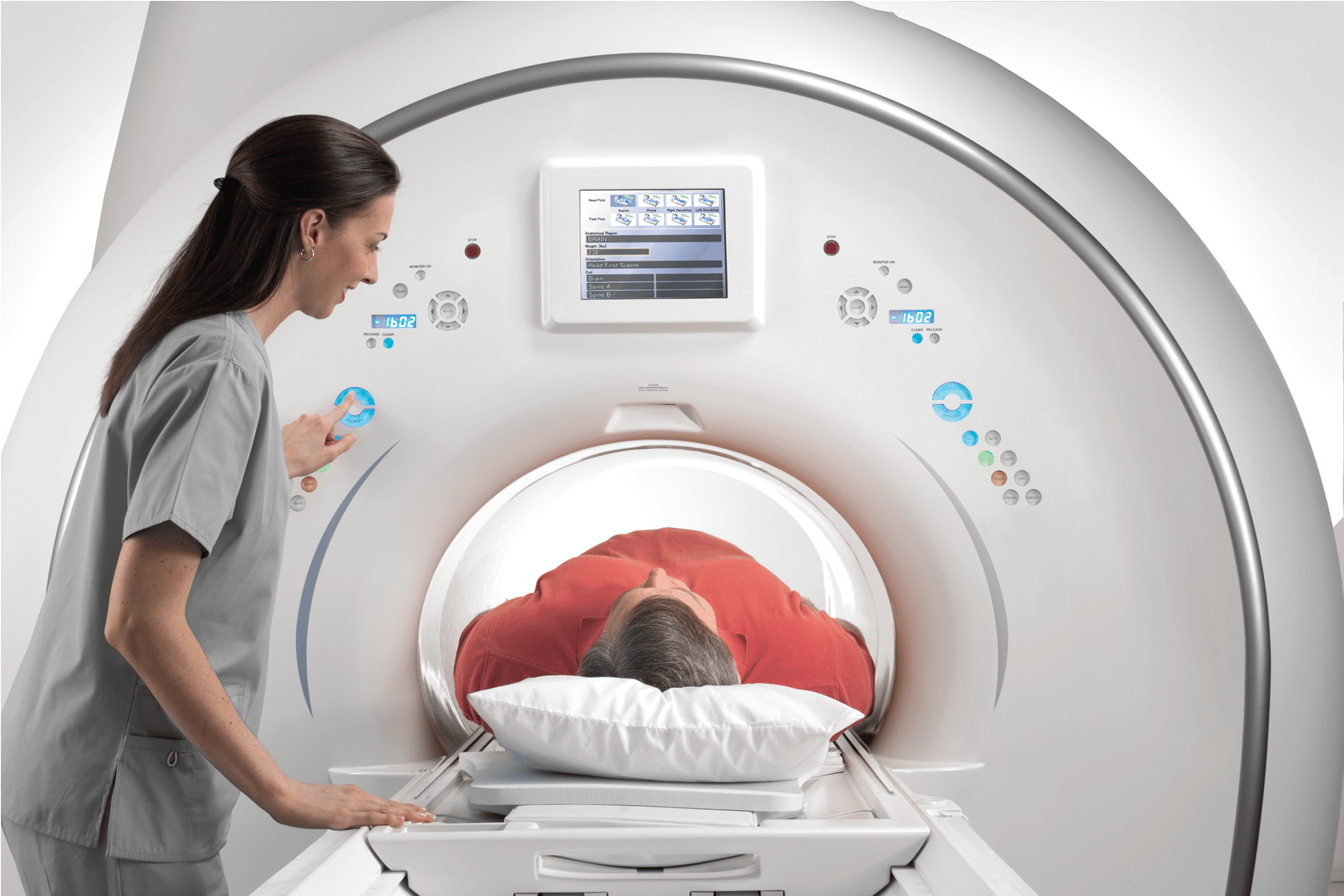
Because no contrast agent is administered, the exam usually involves fewer preparation considerations. You will lie on a table that moves into the MRI scanner while multiple sets of images are obtained. Depending on the area being examined and the type of study ordered, the scan may take several minutes or longer.
An MRI without contrast may be sufficient when the natural differences between tissues allow the radiologist to clearly evaluate the area of concern.
What Is an MRI With Contrast?
An MRI with contrast includes the administration of a contrast agent, usually through an intravenous line placed in the arm or hand. The contrast material most commonly used for MRI contains gadolinium, which temporarily changes how nearby tissues appear on MRI images and can improve the visibility of certain structures and abnormalities.
Contrast does not create the image itself. The MRI scanner still uses magnetic fields and radio waves, but the contrast agent can provide additional information by making certain tissues appear differently from surrounding areas.
This added detail can be particularly useful when doctors need to evaluate blood flow, inflammation, tumors, infections, vascular structures, or areas that have undergone previous surgery.
MRI With Contrast vs. Without Contrast
Although both examinations use the same basic MRI technology, they can provide different types of diagnostic information.
| MRI Without Contrast | MRI With Contrast |
|---|---|
| Does not require an injected contrast agent | Usually involves an IV injection of gadolinium-based contrast |
| Can provide detailed images of many soft tissues | Can make certain abnormalities and blood vessels more visible |
| Often used for orthopedic, spinal, neurological, and other evaluations depending on the clinical question | May be used when evaluating tumors, inflammation, infection, vascular abnormalities, or certain postoperative findings |
| Usually involves fewer contrast-related considerations | Requires reviewing factors such as previous contrast reactions, kidney disease, and pregnancy |
| May be sufficient for many diagnostic questions | Provides additional information when enhancement patterns are diagnostically important |
The appropriate type of MRI is determined by the medical question being investigated rather than by assuming that contrast always produces a better examination.
Why Is Contrast Used in an MRI?
MRI contrast helps radiologists distinguish certain tissues and abnormalities from surrounding structures. When gadolinium reaches an area through the bloodstream, it can alter the appearance of that area on selected MRI sequences.
This can help physicians evaluate how an abnormality behaves rather than simply identifying that something is present. For example, the way an area enhances after contrast administration may provide additional information about its blood supply, inflammation, or other characteristics.
Contrast-enhanced MRI may be useful for examining:
- Certain tumors or masses
- Areas of inflammation
- Some infections
- Blood vessels
- Abnormalities in the brain or spinal cord
- Selected liver, kidney, pelvic, or other organ findings
- Certain breast abnormalities
- Areas that have previously undergone surgery
- Some conditions in which doctors need to distinguish active disease from older tissue changes
Not every condition on this list always requires contrast. The decision depends on the specific clinical situation and the imaging protocol selected by the referring provider and radiology team.
When Is an MRI Without Contrast Used?
An MRI without contrast can answer many diagnostic questions. Modern MRI sequences can distinguish different tissues extremely well even without a contrast injection, which is why many examinations begin or are performed entirely without contrast.
Depending on the clinical situation, MRI without contrast may be used to evaluate joint injuries, ligaments, tendons, cartilage, some spinal conditions, certain neurological symptoms, and numerous other musculoskeletal or soft-tissue concerns.
For example, a patient being evaluated for a suspected ligament injury may not require contrast because the structures being examined can often be clearly visualized with standard MRI sequences.
The exact protocol will depend on what your healthcare provider wants the radiologist to evaluate.
When Is an MRI With Contrast Needed?
Your doctor may order an MRI with contrast when additional tissue characterization is needed or when contrast enhancement could help answer a specific diagnostic question.
One common reason is to evaluate a known or suspected mass. Contrast can sometimes help determine the borders of an abnormal area and how it interacts with surrounding tissues.
Doctors may also use contrast-enhanced MRI when evaluating certain inflammatory or infectious conditions because active inflammation can produce characteristic enhancement patterns.
Another reason involves previous surgery. Scar tissue and recurrent or persistent abnormalities can sometimes appear similar on noncontrast images, while contrast enhancement may provide additional information that helps the radiologist distinguish between them.
Can an MRI Be Ordered With and Without Contrast?
Yes. Some MRI examinations are ordered “with and without contrast.” In these cases, the radiology team obtains one set of images before the contrast material is administered and another set afterward.
Comparing the images can show whether a particular structure or abnormality changes after contrast administration. This enhancement pattern can provide information that would not be available from either set of images alone.
If your order says “MRI with and without contrast,” this does not mean you are undergoing two completely separate MRI appointments. Both portions are generally completed during the same imaging examination.
Is MRI Contrast the Same as CT Scan Contrast?
No. MRI and CT scans typically use different types of contrast agents. MRI contrast commonly contains gadolinium, while contrast used for CT imaging is generally iodine-based.
This distinction is important if you have previously experienced a reaction to contrast material. Having had a reaction to iodinated CT contrast does not automatically mean you will have the same reaction to gadolinium-based MRI contrast.
Gadolinium-based contrast agents generally have a low rate of allergic-like reactions, and severe reactions are rare. Patients should still tell the radiology team about any previous reaction to an MRI contrast agent or other relevant medical history before the examination.
Is MRI Contrast Safe?
Gadolinium-based MRI contrast agents are widely used in diagnostic imaging, but as with any medication, there are potential risks that should be considered for individual patients.
Most patients receive MRI contrast without significant complications. Allergic-like reactions can occur but are uncommon, and severe reactions are rare. Patients with certain medical conditions may require additional evaluation before receiving contrast.
This is one reason why the imaging center may ask questions about your medical history before your MRI.
What If You Have Kidney Disease?
Tell your healthcare provider and the MRI staff if you have kidney disease, kidney failure, have received a kidney transplant, or have been told that your kidney function is abnormal.
A rare condition called nephrogenic systemic fibrosis has been associated with gadolinium-based contrast exposure primarily in patients with severe kidney dysfunction. Modern contrast practices and the selection of appropriate gadolinium agents have substantially changed how this risk is managed, but kidney health remains an important consideration before some contrast-enhanced MRI examinations.
Depending on your medical history, the imaging facility may need recent laboratory results to evaluate kidney function. In other situations, additional testing may not be necessary.
The decision will depend on your individual circumstances and the type of MRI contrast agent being considered.
What If You Are Pregnant?
Always tell your doctor and the MRI technologist if you are pregnant or think you may be pregnant.
MRI does not use ionizing radiation, but gadolinium-based contrast is generally avoided during pregnancy unless the potential diagnostic benefit is considered important enough to justify its use. In certain situations, contrast may be used when critical information cannot reasonably be obtained without it.
Your healthcare team can evaluate the benefits and potential risks based on your specific medical situation.
What Does MRI Contrast Feel Like?
MRI contrast is generally administered through an IV. Some patients may briefly notice a cool sensation around the injection site as the contrast material is administered.
The injection itself usually takes only a short time. The MRI examination then continues while additional images are obtained.
If you experience unusual symptoms during the scan, you can communicate with the MRI technologist, who monitors you throughout the examination.
How Should You Prepare for an MRI With Contrast?
Preparation instructions can vary depending on the type of MRI you are having, so follow the instructions provided by your imaging center.
Before an MRI with contrast, tell the radiology team if you:
- Have kidney disease or reduced kidney function
- Have experienced a previous reaction to gadolinium-based contrast
- Have had a kidney transplant
- Are pregnant or could be pregnant
- Have significant medical conditions that may affect the examination
- Have a pacemaker, implanted medical device, metal implant, or metallic fragment in your body
The last point applies to MRI examinations in general, not only those using contrast. Because MRI uses a strong magnetic field, certain devices and metallic objects must be evaluated for MRI safety before entering the scanner.
You should also tell the imaging center if you experience severe claustrophobia, as accommodations may sometimes be available depending on the facility and examination.
Does an MRI With Contrast Take Longer?
An MRI with contrast may take somewhat longer than a noncontrast MRI because images may need to be obtained before and after the contrast injection.
The total MRI scan time varies significantly depending on the body part being examined, the number of imaging sequences required, and the specific clinical question being investigated.
Remaining as still as possible during the scan is important because movement can affect image quality and may require certain images to be repeated.
Is an MRI With Contrast More Accurate?
It is more accurate to say that contrast can provide additional diagnostic information for certain conditions. An MRI with contrast is not automatically more accurate or better than an MRI without contrast in every situation.
If the condition being evaluated is clearly visible without contrast, administering contrast may not provide meaningful additional information. On the other hand, when doctors need to evaluate enhancement patterns, vascularity, inflammation, or certain abnormalities, contrast may significantly improve the usefulness of the examination.
The best MRI protocol is therefore the one designed to answer the specific medical question.
Can You Refuse Contrast During an MRI?
Patients can discuss concerns about contrast with their healthcare provider and radiology team before the examination. If you are worried about a previous reaction, kidney function, pregnancy, gadolinium exposure, or another issue, mention it before the scan begins.
However, declining contrast may sometimes limit the information available from the examination. If contrast was specifically ordered because it is important for evaluating a suspected condition, completing only the noncontrast portion might not fully answer the clinical question.
Before making that decision, ask why contrast was recommended and whether a noncontrast MRI could provide the information your doctor needs.
MRI With Contrast vs. Without Contrast: Which One Do You Need?
You generally do not need to decide between an MRI with contrast and an MRI without contrast yourself. Your healthcare provider orders the examination based on your symptoms, diagnosis, previous imaging, and the condition being investigated.
The radiologist may also help determine the most appropriate imaging protocol.
An MRI without contrast may be appropriate when the structures or abnormalities being investigated can be adequately evaluated using standard MRI sequences. An MRI with contrast may be recommended when additional information about tissues, blood vessels, inflammation, tumors, infection, or other findings is necessary.
In some situations, both noncontrast and contrast-enhanced images are needed to provide the most complete evaluation.
Questions to Ask Before Your MRI
If you are unsure why your MRI was ordered with or without contrast, these questions can help you better understand the examination:
- Why was this specific MRI ordered?
- Will my examination require contrast?
- What additional information will contrast provide?
- Do I need laboratory testing before receiving contrast?
- Should I change what I eat, drink, or take before the examination?
- Does my medical history affect whether I can receive gadolinium?
- How long will my MRI take?
- Will images be taken both before and after contrast?
- When and how will my results be available?
Knowing what to expect can make the examination easier and help ensure that the radiology team has all the information needed to perform the study safely.
MRI With and Without Contrast in El Paso
If your healthcare provider orders an MRI, the type of examination will depend on the part of the body being studied and the medical question that needs to be answered. Professional Radiology provides MRI and diagnostic imaging services in El Paso, helping physicians obtain detailed images needed to evaluate a wide range of medical conditions.
Before your appointment, review the instructions provided for your specific MRI and inform the imaging team about kidney problems, previous contrast reactions, pregnancy, implanted medical devices, or other relevant medical conditions.
Whether your doctor orders an MRI with contrast, an MRI without contrast, or an MRI with and without contrast, the goal is the same: obtaining the imaging information necessary to help your healthcare team evaluate your condition and determine the appropriate next steps.