A breast biopsy is a procedure used to remove a small sample of breast tissue so it can be examined in a laboratory. It is commonly recommended when a mammogram, breast ultrasound, MRI, or physical exam shows an area that needs further evaluation. Although being told you need a breast biopsy can feel concerning, the procedure itself is usually straightforward, and most image-guided breast biopsies are performed with local anesthesia and minimal recovery time.
Understanding what to expect during a breast biopsy can make the process easier. The exact experience depends on the type of biopsy being performed, the location of the abnormality, and whether imaging guidance is needed.
Why Is a Breast Biopsy Performed?
A breast biopsy is often recommended when imaging reveals a finding that cannot be fully characterized with mammography, ultrasound, or MRI alone. The goal is to obtain tissue that can be analyzed by a pathologist to determine whether the area is benign, precancerous, or cancerous.
A doctor may recommend a breast biopsy for findings such as:
- A breast lump or mass
- A suspicious area seen on a mammogram
- Abnormal calcifications
- A change seen on breast ultrasound
- A finding detected on breast MRI
- Changes in breast tissue that require further evaluation
- Certain changes involving the nipple or skin
Not every abnormal breast imaging result means cancer. Many breast biopsies ultimately show benign conditions, but tissue sampling is often the most reliable way to determine exactly what an abnormal area represents.
What Types of Breast Biopsy Are Commonly Used?
There are several types of breast biopsy, and the appropriate method depends on the imaging finding and where it is located.
Ultrasound-Guided Breast Biopsy
An ultrasound-guided breast biopsy uses real-time ultrasound imaging to help the radiologist locate the area of concern and guide the biopsy needle into the correct position.
This type of biopsy is often used when a breast mass or other abnormality can be clearly seen on ultrasound. Because ultrasound provides continuous imaging, the radiologist can watch the needle as it approaches the target area.
Stereotactic Breast Biopsy
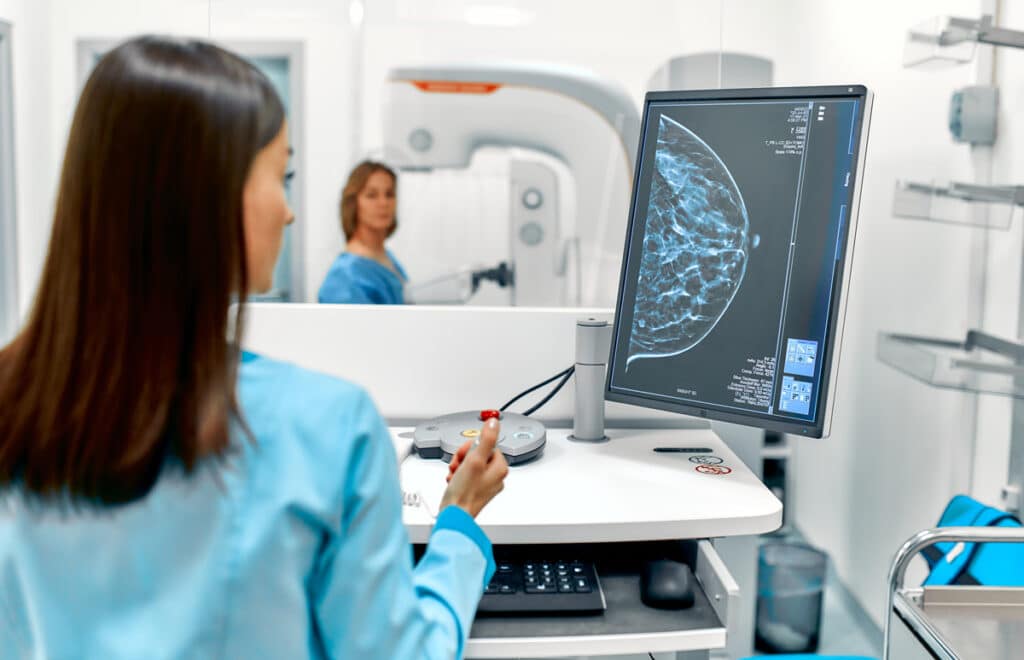
A stereotactic breast biopsy uses mammography images taken from different angles to calculate the exact location of an abnormality.
This technique is commonly used for findings that are visible on mammography but may not be clearly seen with ultrasound, including certain calcifications or subtle areas of tissue distortion.
MRI-Guided Breast Biopsy
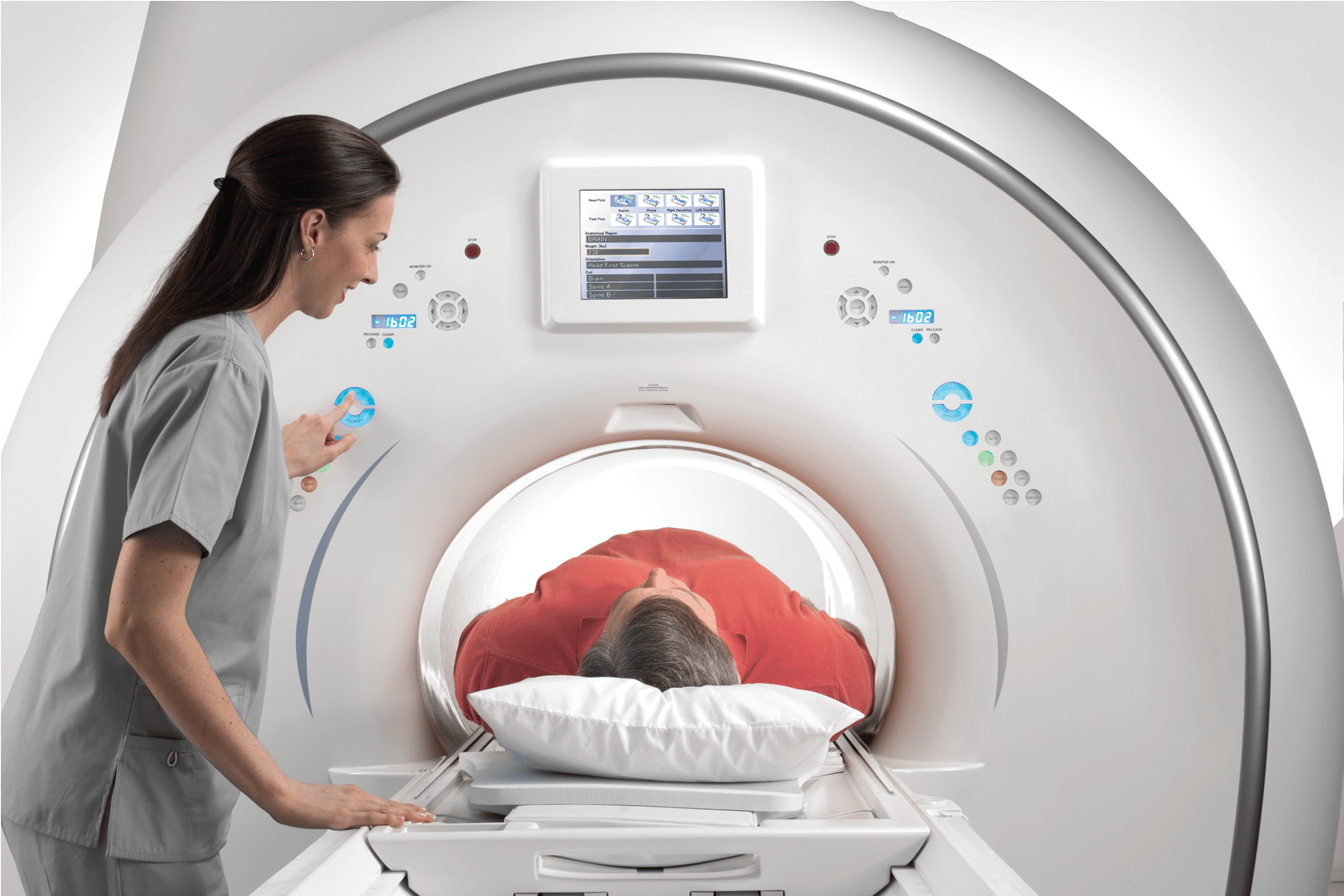
An MRI-guided breast biopsy may be recommended when an abnormality is visible on breast MRI but cannot be adequately identified with mammography or ultrasound.
MRI images help the radiologist determine the location of the abnormal area so tissue samples can be collected accurately.
Core Needle Biopsy
A core needle biopsy is one of the most common methods used for breast tissue sampling. A hollow needle removes small cylinders, or cores, of tissue that are sent to a laboratory for examination.
Image guidance using ultrasound, mammography, or MRI may be used to ensure that the correct area is sampled.
Fine Needle Aspiration
Fine needle aspiration uses a thinner needle to remove cells or fluid from a breast abnormality. It may be useful in certain situations, although core needle biopsy is often preferred when a larger tissue sample is needed.
How Should You Prepare for a Breast Biopsy?
Preparation for a breast biopsy is usually simple, but you should follow the specific instructions provided by the imaging center or your healthcare provider.
Before the procedure, tell the medical team about all medications and supplements you take, especially medications that affect blood clotting. Do not stop prescription medication on your own. Your healthcare provider will tell you whether any medication needs to be adjusted before the biopsy.
You should also tell the imaging staff if you have allergies, a bleeding disorder, a history of unusual bleeding, or any other medical condition that may affect the procedure.
If your biopsy will be MRI-guided, additional MRI safety questions may apply. You should tell the team about implanted devices, metal in your body, severe claustrophobia, or the possibility of pregnancy.
Can You Eat Before a Breast Biopsy?
For many breast needle biopsies performed with local anesthesia, patients can eat and drink normally unless they receive different instructions from the imaging center.
Preparation requirements can vary depending on the type of biopsy and whether sedation is planned. Always follow the instructions given for your specific procedure rather than assuming that fasting is or is not required.
What Should You Wear to a Breast Biopsy?
Wear comfortable clothing that is easy to remove from the upper body. A two-piece outfit is usually more convenient than a dress because you will generally need to undress from the waist up.
You may be asked to avoid applying deodorant, lotion, powder, or other products to the breast and underarm area, particularly when mammography is involved. These products can sometimes interfere with breast imaging.
What Happens Before the Breast Biopsy?
Before the procedure begins, the radiologist or medical team will review the biopsy process with you and answer questions. You may be asked to sign a consent form confirming that you understand the procedure and its potential risks.
The area of concern will be identified using the imaging method appropriate for your biopsy. Once the correct location has been confirmed, the skin will be cleaned and local anesthetic will be injected.
The anesthetic numbs the breast tissue around the biopsy site. You may feel a brief sting or burning sensation when it is administered, but the area should become numb soon afterward.
Does a Breast Biopsy Hurt?
Most image-guided breast biopsies are performed with local anesthesia, so you should not feel sharp pain during tissue sampling. You may feel pressure, pulling, vibration, or movement as the biopsy device is positioned and samples are collected.
Some biopsy devices make a clicking or snapping sound when a tissue sample is obtained. This is normal and does not necessarily mean anything has gone wrong.
If you feel significant pain during the procedure, tell the radiologist or technologist so they can evaluate the area and provide additional anesthetic if appropriate.
What Happens During a Breast Biopsy?
The exact steps depend on the type of breast biopsy, but the general process is similar.
First, the radiologist identifies the abnormal area using ultrasound, mammography, or MRI. The skin is cleaned, and local anesthesia is administered.
A small opening may then be made in the skin. The biopsy needle is carefully guided toward the area of concern while the radiologist monitors its position with imaging.
Several tissue samples are usually obtained so the pathologist has enough material for analysis. The number of samples depends on the type of abnormality and biopsy device.
The tissue samples are placed in containers and sent to a pathology laboratory for examination.
What Is a Breast Biopsy Marker?
After tissue samples are collected, a tiny marker or clip may be placed at the biopsy site.
This marker identifies the exact location where the tissue was removed. It can be useful for future mammograms, follow-up imaging, or surgery if additional treatment is eventually needed.
The marker is very small and is designed to remain in the breast. Most patients cannot feel it, and it generally does not cause problems during everyday activities.
A mammogram may be performed after marker placement to confirm its location.
How Long Does a Breast Biopsy Take?
The biopsy itself may take only a short period of time, but the entire appointment can take longer because of preparation, positioning, imaging, local anesthesia, tissue sampling, and post-procedure care.
Many image-guided breast biopsy appointments take approximately 30 to 60 minutes, although the exact length varies depending on the type of biopsy and how easily the area can be accessed.
MRI-guided biopsies may take longer because additional imaging is required before and during the procedure.
What Happens Immediately After a Breast Biopsy?
After the tissue samples are collected, pressure is applied to the biopsy site to reduce bleeding.
A small bandage or dressing is then placed over the area. In many cases, stitches are not necessary because the skin opening is very small.
You may also receive an ice pack to help reduce swelling and discomfort.
Before you leave, the medical team will give you instructions explaining how to care for the biopsy site and what symptoms to watch for during recovery.
Breast Biopsy Recovery
Recovery after a needle breast biopsy is usually relatively quick. Many patients are able to return home shortly after the procedure and resume normal daily activities with some temporary restrictions.
Mild soreness, bruising, tenderness, or swelling around the biopsy site is common. These symptoms usually improve gradually over the following days.
An ice pack may help reduce swelling and discomfort. Follow the instructions you receive regarding how long and how often to use it.
What Should You Avoid After a Breast Biopsy?
Your imaging center may recommend avoiding heavy lifting, strenuous exercise, or vigorous upper-body activity for a short period after the biopsy.
The exact restrictions depend on the procedure, so follow the instructions provided by your medical team.
You may also be told when it is safe to shower and when to remove the bandage. Keeping the biopsy site clean and dry according to the instructions can help reduce the risk of irritation or infection.
Can You Go Back to Work After a Breast Biopsy?
Many people can return to work the same day or the following day, especially if their job does not involve heavy physical activity.
If your work requires lifting, strenuous movement, or repetitive upper-body activity, you may need additional recovery time or temporary activity restrictions.
Ask the imaging team what is appropriate based on the type of biopsy you are having and the work you normally perform.
Is Bruising Normal After a Breast Biopsy?
Yes. Bruising is common after a breast biopsy because the needle passes through breast tissue and can affect small blood vessels.
The bruised area may change color as it heals and can remain visible for several days or longer.
Mild swelling and tenderness can also occur. These symptoms are usually temporary and improve with time.
When Should You Call Your Doctor After a Breast Biopsy?
Most breast biopsy recovery symptoms are mild, but contact your healthcare provider if you develop symptoms that are more severe or do not improve as expected.
You may need medical attention if you experience:
- Heavy or persistent bleeding
- Rapidly increasing breast swelling
- Severe pain that is not improving
- Increasing redness or warmth around the biopsy site
- Drainage that looks like pus
- Fever
- Other symptoms specifically identified in your post-procedure instructions
A small amount of bruising, soreness, or swelling is usually expected, but significant changes should be reported.
How Long Does It Take to Get Breast Biopsy Results?
Breast biopsy results are not usually available immediately because the tissue must be examined by a pathologist.
The laboratory processes the samples and evaluates the cells and tissue under a microscope. Additional tests may sometimes be required before the final pathology report is completed.
Results may be available within several business days, but the exact timeline varies depending on the laboratory, the type of tissue sample, and whether additional analysis is needed.
Your healthcare provider should explain how you will receive the results and who will discuss them with you.
What Do Breast Biopsy Results Mean?
Breast biopsy results can show many different findings.
A benign result means the sampled tissue does not show cancer. Benign findings may include cysts, fibroadenomas, fibrocystic changes, or other noncancerous conditions.
Some biopsy results may identify atypical or high-risk cells that are not cancer but may require additional monitoring, surgery, or further evaluation.
If cancer cells are identified, additional information from the pathology report helps your healthcare team determine the type of breast cancer and what further testing or treatment may be needed.
The pathology result must also be compared with the imaging findings. Radiologists and referring providers evaluate whether the pathology explanation matches what was seen on mammography, ultrasound, or MRI.
What Happens If the Breast Biopsy Is Benign?
If the biopsy shows a benign finding that matches the imaging appearance, your doctor may recommend returning to routine breast screening or completing follow-up imaging after a specified period.
The recommendation depends on the type of abnormality, your medical history, and whether the pathology result is considered consistent with the imaging findings.
A benign biopsy does not necessarily mean no additional follow-up is ever required. Follow the screening and imaging schedule recommended by your healthcare provider.
What Happens If More Testing Is Needed?
Sometimes the biopsy result does not completely explain an imaging abnormality, or the pathology report identifies a high-risk finding that requires further evaluation.
In these situations, your healthcare provider may recommend another biopsy, surgical removal of the area, additional breast imaging, or consultation with a breast specialist.
This does not automatically mean cancer is present. Additional testing may simply be necessary to obtain a more complete answer.
Breast Biopsy vs. Breast Surgery
Most image-guided breast biopsies are minimally invasive and do not require traditional surgery.
A needle biopsy removes small tissue samples through a tiny opening in the skin, usually under local anesthesia. A surgical biopsy removes a larger portion of tissue through an incision and may require different anesthesia and a longer recovery period.
When an imaging abnormality can be accurately sampled with a needle biopsy, this less invasive approach is often preferred because it can provide diagnostic information with less tissue disruption and shorter recovery.
How Accurate Is an Image-Guided Breast Biopsy?
Image guidance allows the radiologist to precisely target the area identified on mammography, ultrasound, or MRI.
Accurate targeting is especially important for abnormalities that cannot be felt during a physical examination. Imaging helps confirm that the biopsy needle reaches the correct location before tissue is collected.
The pathology result is then compared with the imaging appearance to make sure the two are consistent. If they do not match, additional evaluation may be recommended.
Questions to Ask Before a Breast Biopsy
Knowing what to expect can make the procedure feel more manageable. Before your appointment, consider asking:
- What type of breast biopsy am I having?
- Why was this type of biopsy recommended?
- Will the procedure be guided by ultrasound, mammography, or MRI?
- Do I need to stop or adjust any medications?
- Can I eat and drink before the procedure?
- How long will the biopsy take?
- Will a marker be placed in my breast?
- What activities should I avoid afterward?
- When should I expect the pathology results?
- Who will contact me to discuss the results?
These questions can help you understand both the biopsy itself and what will happen after the procedure.
Breast Biopsy in El Paso
If breast imaging identifies an area that requires further evaluation, an image-guided breast biopsy can provide the tissue sample needed for an accurate diagnosis. Professional Radiology provides diagnostic breast imaging and image-guided procedures in El Paso to help physicians investigate suspicious findings discovered through mammography, ultrasound, MRI, or other breast imaging examinations.
Before your breast biopsy, carefully follow the preparation instructions provided by the imaging center and make sure the medical team knows about your medications, allergies, previous procedures, and relevant medical history.
Most breast needle biopsies are minimally invasive, performed with local anesthesia, and followed by a relatively short recovery period. Understanding the preparation, procedure, recovery, and results process can help you know what to expect at every stage of your breast biopsy.